

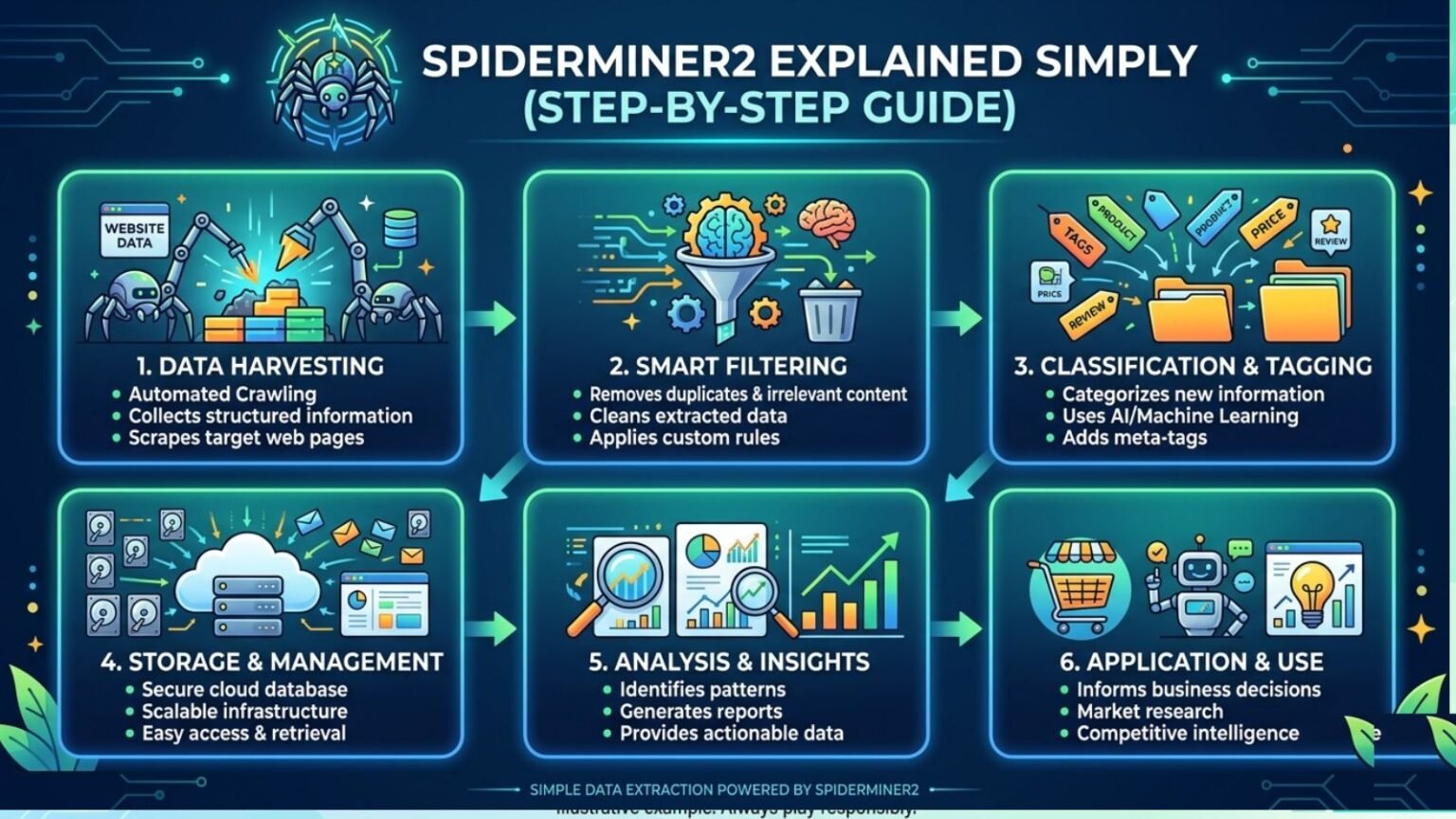
Spiderminer2 – In today’s fast-moving digital environment, efficiency is everything. Whether it’s data handling, workflow automation, or system optimization, users are constantly looking for solutions that reduce complexity and increase performance. One term that often appears in discussions about modern optimization systems is Spiderminer2.
While the name may sound technical or even mysterious at first, Spiderminer2 is best understood as a performance-focused system or method designed to streamline processes and improve efficiency. Instead of relying on slow, traditional approaches, it emphasizes speed, structure, and smarter execution.
In this guide, we will break down Spiderminer2 in a simple way—what it is, how it works, why it matters, and how it can be understood step by step.
What is Spiderminer2?
Spiderminer2 can be described as a modern optimization concept or system designed to improve how processes are handled, whether in data management, digital workflows, or productivity systems.
At its core, Spiderminer2 focuses on:
- Speeding up slow processes
- Improving workflow efficiency
- Reducing unnecessary steps
- Enhancing system performance
- Making complex operations simpler
Instead of being just a buzzword, it represents the idea of moving from traditional, slow methods to more structured and optimized digital processes.
Also Read: Betlv247 Platform Explained Step by Step
A simple way to understand it is:
If older systems are like long, crowded roads, Spiderminer2 is like a high-speed highway designed for smooth and fast movement.
Why Spiderminer2 Matters
Modern digital systems deal with large amounts of information and complex operations. Without optimization, these systems can become slow and inefficient.
Spiderminer2 matters because it addresses common problems such as:
1. Slow Processing
Traditional systems often require multiple manual steps, which slows down performance.
2. Inefficient Workflows
Too many unnecessary actions can make processes complicated and time-consuming.
3. Lack of Structure
Without proper optimization, systems become messy and hard to manage.
4. Performance Bottlenecks
As data grows, older methods struggle to keep up.
Spiderminer2 aims to solve these issues by introducing a more streamlined and structured approach.
Core Idea Behind Spiderminer2
The main idea behind Spiderminer2 is simple:
“Do more with less effort, in less time, with better results.”
This is achieved through:
- Smart process design
- Reduced redundancy
- Faster execution paths
- Optimized system flow
Instead of adding complexity, it removes unnecessary steps and focuses only on what truly matters.
How Spiderminer2 Works (Step-by-Step Guide)
To understand Spiderminer2 clearly, let’s break down its working process step by step.
Step 1: Input Collection
Every system starts with input. In Spiderminer2, data or tasks are collected from a source.
This could include:
- User actions
- System data
- Workflow requests
- External inputs
The goal is to gather everything needed before processing begins.
Step 2: Structuring the Data
Once input is collected, Spiderminer2 organizes it into a structured format.
This step ensures:
- No unnecessary duplication
- Clear categorization
- Better processing flow
Structured data is easier to handle and reduces confusion later in the process.
Step 3: Optimization Layer Processing
This is where Spiderminer2 becomes powerful.
Instead of processing everything in a linear and slow manner, it applies an optimization layer that:
- Removes unnecessary steps
- Prioritizes important actions
- Streamlines operations
- Improves execution speed
Think of this step as a filter that refines everything before final processing.
Step 4: Fast Execution Path
After optimization, the system moves into execution mode.
Here, tasks are completed through a fast-track process, meaning:
- Reduced delays
- Direct processing routes
- Minimal interruptions
This is where Spiderminer2 shows its biggest advantage compared to traditional systems.
Step 5: Output Generation
Finally, the system produces the output.
This could be:
- Processed data
- Completed task results
- Optimized workflow output
- Final system response
The output is typically faster, cleaner, and more efficient due to the optimization process.
Key Features of Spiderminer2
Spiderminer2 stands out because of its focus on simplicity and performance. Its key features include:
1. Speed Optimization
Designed to reduce processing time and improve system responsiveness.
2. Structured Workflow
Ensures that every step follows a logical and organized flow.
3. Reduced Complexity
Eliminates unnecessary processes that slow systems down.
4. Scalability
Can handle increasing workloads without losing efficiency.
5. System Efficiency
Maximizes output while minimizing input effort.
Benefits of Spiderminer2
Using a system like Spiderminer2 can provide several advantages:
1. Faster Results
Processes are completed in less time due to optimized pathways.
2. Better Productivity
Users or systems can achieve more in less time.
3. Improved Performance
Reduces lag, delays, and bottlenecks.
4. Cleaner Workflow Structure
Makes systems easier to understand and manage.
5. Long-Term Efficiency
Sustains performance even as complexity grows.
Where Spiderminer2 Can Be Applied
Although the concept is broad, Spiderminer2-style systems can be applied in several areas:
1. Data Processing Systems
Improving how large datasets are handled.
2. Workflow Automation
Streamlining business or digital processes.
3. Productivity Tools
Helping users complete tasks faster.
4. Software Optimization
Enhancing application performance.
5. System Architecture
Improving backend structure and efficiency.
Challenges and Limitations
Like any system or concept, Spiderminer2 also has challenges:
1. Implementation Complexity
Designing optimized systems requires careful planning.
2. Initial Setup Time
Setting up structured workflows may take effort.
3. Learning Curve
Users may need time to understand optimized systems.
4. Compatibility Issues
Not all older systems easily adapt to modern optimization models.
Future of Spiderminer2 Concepts
As technology continues to evolve, optimization systems like Spiderminer2 will become even more important.
Future improvements may include:
- AI-driven optimization
- Real-time adaptive processing
- Self-learning workflow systems
- Fully automated execution paths
- Smarter resource allocation
The overall direction is clear: faster, smarter, and more efficient digital systems.
FAQs
1. What is Spiderminer2 in simple words?
Spiderminer2 is a concept or system designed to improve efficiency by optimizing processes and making workflows faster and more structured.
2. Is Spiderminer2 a tool or a method?
It can be understood as both depending on context, but generally it represents a method or system for improving performance and reducing complexity.
3. What is the main benefit of Spiderminer2?
The main benefit is improved speed and efficiency in handling tasks, processes, or data.
4. Where can Spiderminer2 be used?
It can be applied in data processing, workflow automation, software optimization, and productivity systems.
5. Is Spiderminer2 difficult to understand?
No, once broken down into steps, it is a simple concept focused on improving efficiency and reducing unnecessary complexity.