
Introduction
Knowing how to hang a picture correctly can genuinely transform any room in your home. Most people either leave artwork leaning against walls for months or hammer nails in the wrong spot and end up with a wall full of holes. It doesn’t have to be that frustrating. With the right tools, a little patience, and a simple process, anyone can hang pictures like a pro. This guide covers everything from choosing the right wall anchor to getting your frames perfectly level. Whether you’re hanging one small photo or building a full gallery wall, mastering how to hang a picture is easier than you think. Let’s get started.
Why Knowing How to Hang a Picture Properly Matters More Than You Think
A crooked frame or a picture hung too high throws off the entire feel of a room. Wall art placement is one of those subtle things that separates a well-designed home from one that just feels a bit off. When you hang pictures at the right height and in the right position, your walls look intentional and polished rather than random and rushed.
Beyond aesthetics, hanging pictures incorrectly can damage your walls or even drop your frames onto the floor. Using the wrong hardware on a drywall surface is a common mistake that causes frames to fall. Learning the correct technique saves you from expensive wall repairs and keeps your artwork safely in place for years without any problems.
Tools You Need Before You Learn How to Hang a Picture
Before you drive a single nail, gather your tools. You’ll need a hammer, a pencil, a measuring tape, and a spirit level or a smartphone level app. For heavier pieces, add a stud finder to your kit. These tools cost very little but make the difference between a frame that stays straight for years and one you’re constantly adjusting every time someone walks past.
You’ll also want picture hooks or nails suited to your frame’s weight, wall anchors for drywall hanging, and optionally some painter’s tape for planning your layout before committing to holes. Having everything ready before you start prevents the frustration of stopping halfway through to hunt for a tool. Preparation really is 80 percent of successfully hanging any picture.
Choosing the Right Hook or Nail for Your Picture’s Weight
Not all hooks are the same. A small nail works for lightweight frames under 5 lbs. For medium frames between 5 and 20 lbs, use a proper picture hook with an angled nail — these grip the wall far more securely. For anything heavier, find a wall stud or use a heavy-duty drywall anchor. Always check the weight rating on the packaging before buying.
How to Find the Perfect Height When Hanging a Picture
The golden rule in art hanging is the 57-inch eye-level rule. The center of your artwork should sit approximately 57 to 60 inches from the floor. This is the average human eye level and it’s the standard used by most art galleries worldwide. It makes pictures feel naturally placed and comfortable to look at rather than awkwardly high or too low.
However, rules have exceptions. Above a sofa or headboard, the bottom of the frame should sit 6 to 8 inches above the furniture. This visually connects the art to the piece below it. When you hang a picture in a hallway or staircase, follow the eye-level rule for each individual piece to create a natural flow as someone walks through the space. For a deeper look at art hanging height standards, Architectural Digest’s wall art placement guide is an excellent reference from one of the most trusted names in interior design.
Step-by-Step: How to Hang a Picture on Drywall
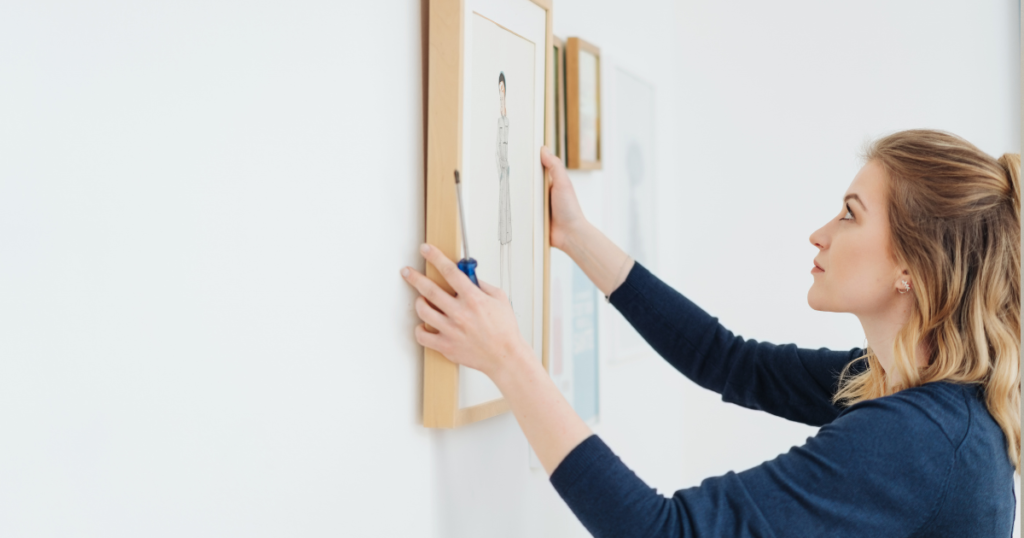
First, mark your desired center point lightly with a pencil. Then measure from the top of your frame down to the hanging hardware on the back — whether that’s a wire, a sawtooth bracket, or a keyhole slot. Subtract that measurement from your center mark to find where your nail or hook needs to go. This step is where most people make mistakes, so take your time.
Drive your nail or hook at a slight downward angle for better grip. Hang the frame and use your spirit level to check it’s straight. Make tiny adjustments until it’s perfect. Step back and view from across the room — small angles look much more noticeable from a distance. Once level, press gently on both sides to make sure the frame sits flush and securely against the wall.
How to Hang Heavy Pictures Without Damaging Your Walls
Heavy artwork needs proper support. Always try to hang heavy pictures into a wall stud using a wood screw — studs are typically spaced 16 inches apart and you can find them with a stud finder. A screw driven into a stud can hold 50 to 100 lbs with no issues. This is by far the safest method for large, heavy frames.
When a stud isn’t available at your desired location, use a drywall anchor. Toggle bolt anchors are the strongest option for drywall and can hold 30 to 50 lbs depending on the type. Plastic expansion anchors work for lighter loads. Always read the weight rating on the package. The team at This Old House has a comprehensive guide to drywall anchors that covers every anchor type and when to use each one.
How to Hang Pictures Without Nails Using Command Strips
If you rent your home or simply want to avoid wall damage, Command strips are a brilliant solution. They use a special adhesive that holds firmly and removes cleanly without leaving marks. They work on most smooth wall surfaces including painted drywall, tiles, and wood paneling. Always check the weight limit on the specific strip you’re using before trusting them with valuable artwork.
Clean the wall surface thoroughly before applying Command strips. Press them firmly against the wall for 30 seconds, then wait one hour before hanging anything. Many people skip the waiting step and wonder why their frames fall. Patience is essential here. For extra security on heavier frames, use multiple strips and spread the weight evenly across the back of the frame rather than concentrating it in one spot.
How to Create a Gallery Wall: Planning and Hanging Multiple Pictures
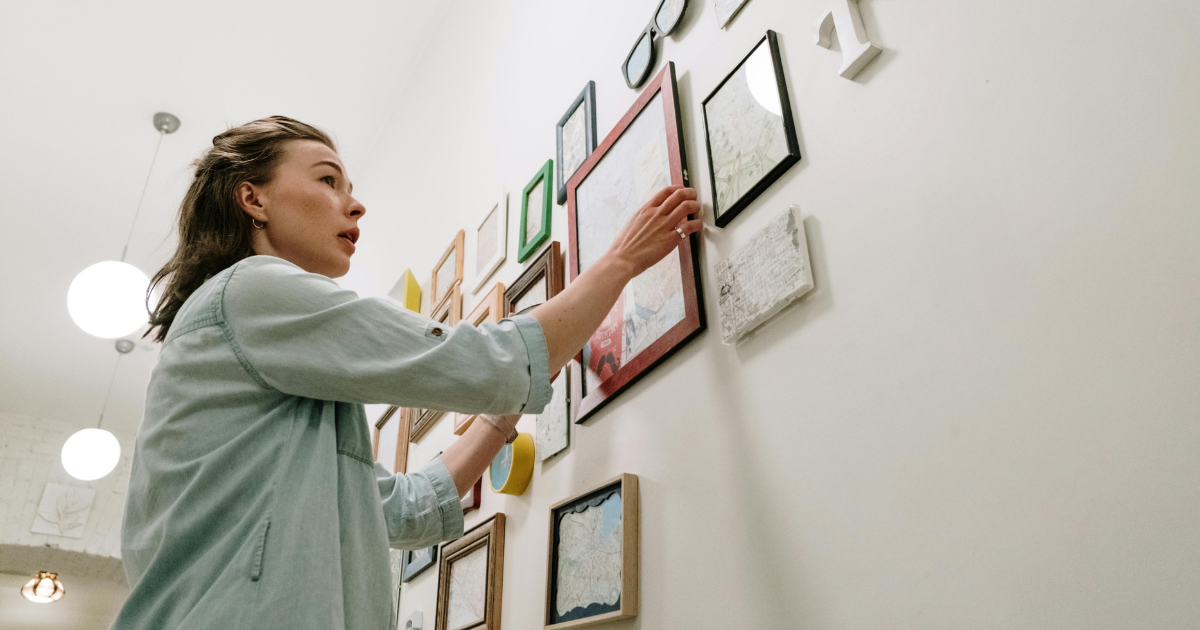
A gallery wall looks stunning when done well but chaotic when done carelessly. Start by tracing each frame onto paper and cutting out the shapes. Tape these paper templates to your wall with painter’s tape and rearrange them until you love the layout — no holes yet. This planning step saves you from a wall riddled with test holes.
Keep consistent spacing between frames — 2 to 3 inches is the sweet spot for most gallery walls. Mix frame sizes and orientations for visual interest but keep colors or finishes cohesive so it doesn’t look messy. Once you’re happy with the paper layout, mark your nail positions through the templates, remove the paper, and hang each picture frame one at a time, checking level as you go.
Picture Hanging Tools and When to Use Them
| Tool | Best For | Weight Capacity |
| Small nail | Lightweight frames and photos | Up to 5 lbs |
| Picture hook with angled nail | Medium frames and artwork | 5 to 20 lbs |
| Plastic drywall anchor | Medium frames, no stud available | 10 to 25 lbs |
| Toggle bolt anchor | Heavy frames, no stud available | 30 to 50 lbs |
| Wood screw into stud | Heavy or oversized artwork | 50 to 100 lbs |
| Command strips | No-damage hanging, rental homes | Up to 16 lbs per pair |
| Picture wire on two hooks | Large frames needing stability | Varies by wire gauge |
How to Keep Picture Frames Straight and Level Over Time
Frames shift over time due to vibrations, air movement, and the natural settling of walls. A clever trick is to stick a small piece of bumper pad or rubber furniture pad on the bottom two corners of the frame back. This friction keeps the frame from sliding sideways on the wall. These tiny pads cost almost nothing and save endless straightening frustrations.
Another option is to use two hooks spaced apart instead of one centered hook. This two-point hanging method dramatically reduces rotation and keeps even large frames level for much longer. For frames with picture wire, pull the wire tight against two hooks rather than letting it droop from a single point. A level picture frame stays level much longer when the hanging hardware distributes the weight evenly.
How to Hang a Picture on Brick, Tile, or Concrete Walls
Hard surfaces require different hardware. For brick or concrete, you need a masonry drill bit and a hammer drill to make a pilot hole. Insert a plastic rawl plug into the hole, then drive a screw into it. This creates a solid anchor point that holds extremely well — often better than drywall. Never try to drive a nail directly into brick or concrete without drilling first.
For tiled walls in bathrooms or kitchens, use adhesive picture hooks designed specifically for tiles to avoid cracking the surface. If you must drill into tile, use a diamond-tipped drill bit and go slowly with low speed and light pressure. Always drill between the grout lines where possible rather than through the tile itself. The Family Handyman’s guide to drilling into tile explains the exact technique step by step and helps you avoid the most common mistakes that crack tiles.
Common Mistakes to Avoid When You Learn How to Hang a Picture
The most common mistake is eyeballing the height without measuring. What looks straight when you’re close often looks crooked from across the room. Always measure, mark with a pencil, and use a level. The extra two minutes this takes saves you from rehanging the same picture three times. Precision is what separates a professional-looking wall from an amateur one.
Another frequent error is ignoring the weight of the frame when choosing hardware. People use a single small nail for a heavy mirror and wonder why it eventually pulls out. Match your hardware to the weight every single time. Also, never hang pictures directly above beds or sofas using only Command strips for heavy frames — safety comes first when there’s a risk of the frame falling on someone.
Conclusion
You now have everything you need to master how to hang a picture on any wall surface in your home. From choosing the right hardware and finding the perfect height, to building a beautiful gallery wall and keeping frames level for years — it all comes down to measuring carefully and using the right tools for the job. Don’t rush the process. A few extra minutes of preparation makes the difference between art that looks professionally placed and frames that frustrate you every time you walk past. Go pick your favorite piece, grab your measuring tape, and give your walls the attention they deserve. Your home will thank you for it.
Frequently Asked Questions
What Is the Best Height to Hang a Picture on a Wall?
The center of your artwork should sit 57 to 60 inches from the floor, which aligns with the average human eye level. Above furniture like sofas or headboards, position the bottom of the frame 6 to 8 inches above the piece to visually connect the art and the furniture beneath it.
How Do You Hang a Picture Without Making Holes in the Wall?
Command adhesive strips are the most popular no-damage solution and work on most smooth painted walls. Always clean the surface before applying, press firmly for 30 seconds, and wait at least one hour before hanging. Check the weight limit on the package to ensure it suits your frame’s weight.
How Do You Find a Stud in the Wall for Hanging Heavy Art?
Use an electronic stud finder, which is available at any hardware store for under $20. Alternatively, knock lightly along the wall — a solid thud indicates a stud while a hollow sound means drywall only. Studs are typically spaced 16 inches apart, so once you find one, the next is 16 inches away.
How Far Apart Should Pictures Be Hung in a Gallery Wall?
A spacing of 2 to 3 inches between frames is the standard recommendation for gallery walls. This distance feels intentional and curated without making the arrangement feel cluttered. Use paper templates taped to the wall before committing to any nails so you can adjust the layout freely.
Can You Hang Pictures on a Plaster Wall the Same Way as Drywall?
Plaster walls require more care since they crack more easily than drywall. Use a sharp nail or a dedicated plaster anchor rather than a standard drywall anchor. Drill pilot holes before inserting screws, go slowly, and avoid striking the wall too hard. Finding studs behind plaster is also more effective using a quality electronic stud finder.